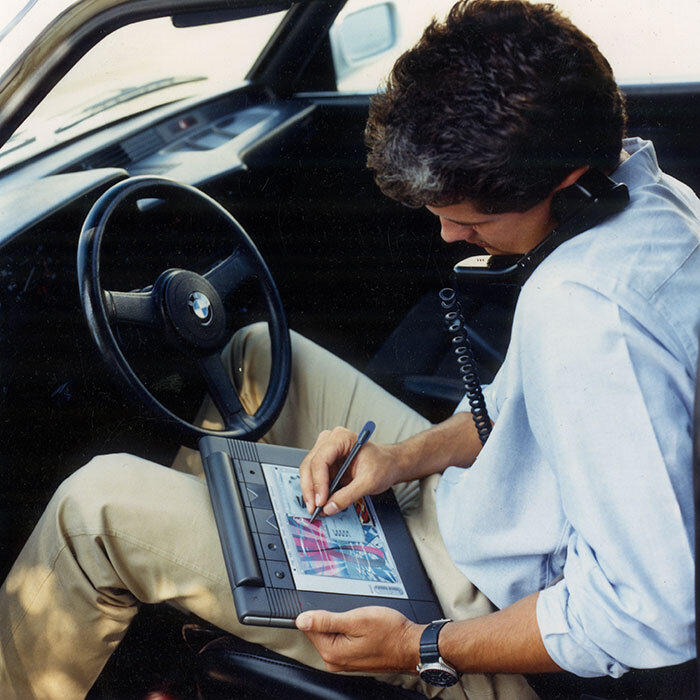
BRAND FOCUS At one point, Doug developed futuristic projects simultaneously at Apple. This involved the first evolutions of what later became the Newton and iPad.
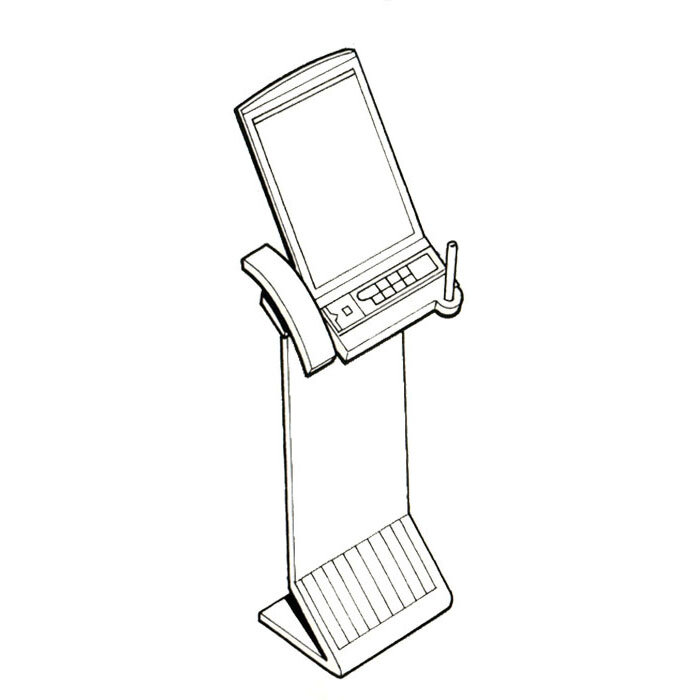
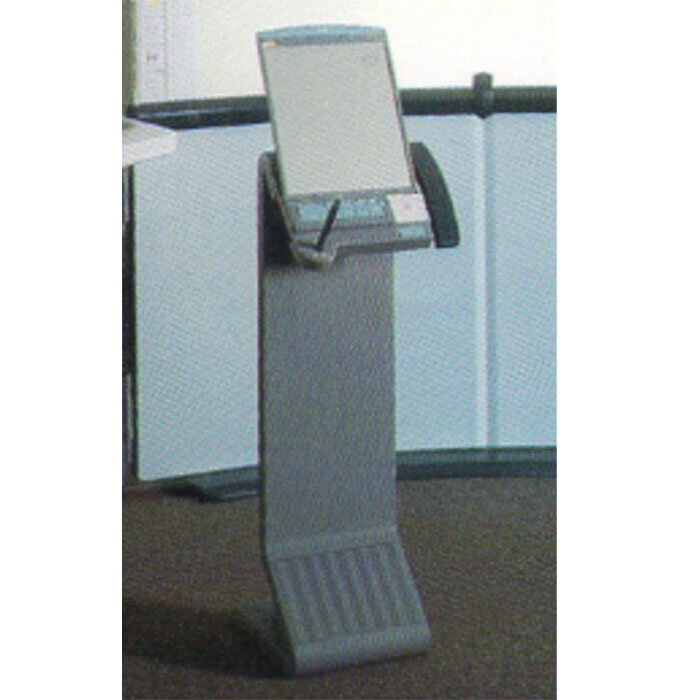
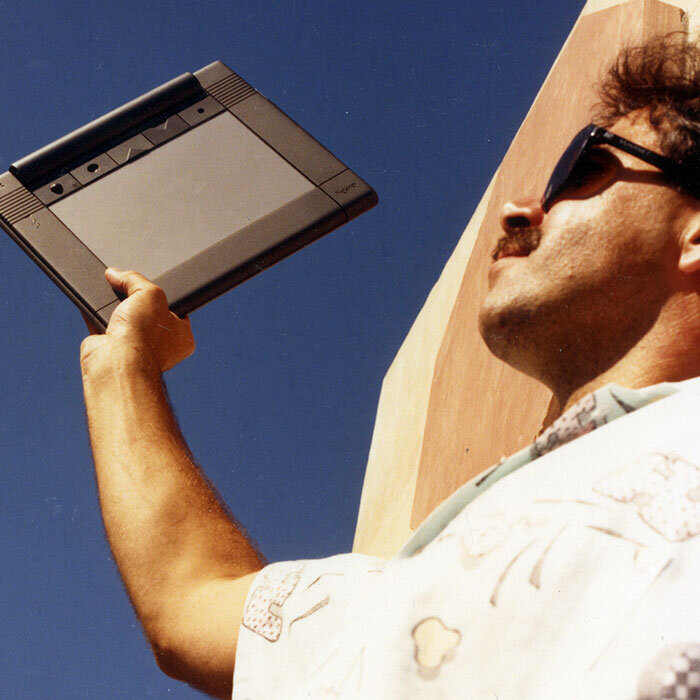
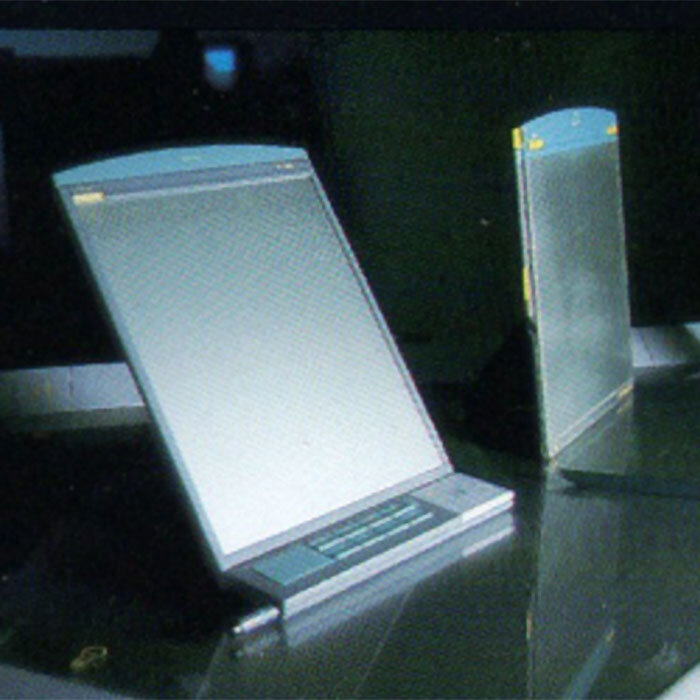
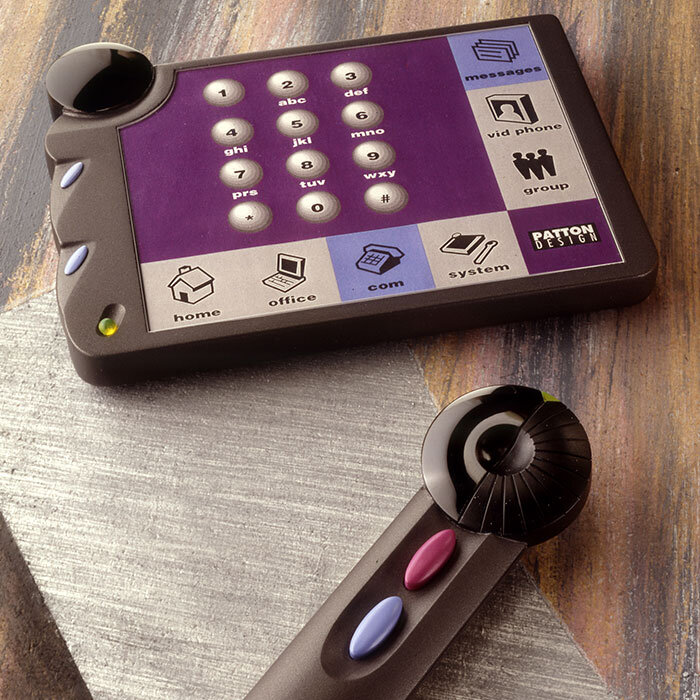
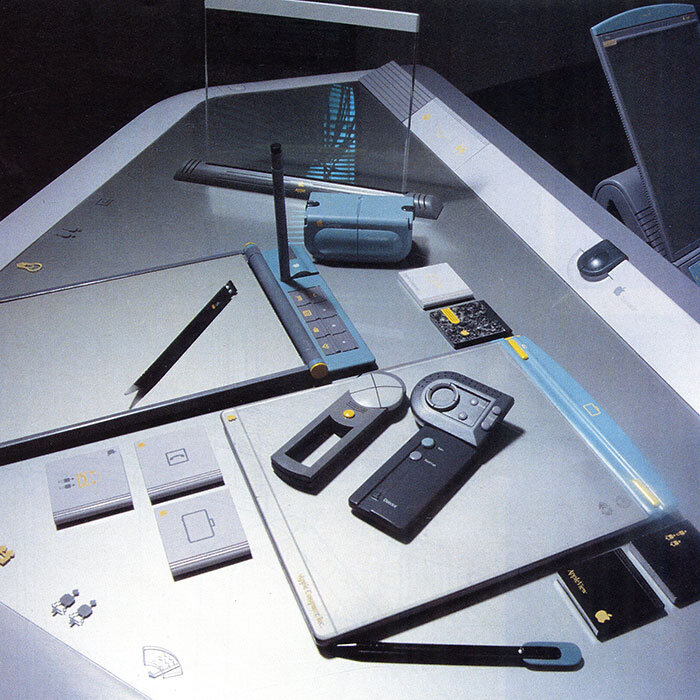
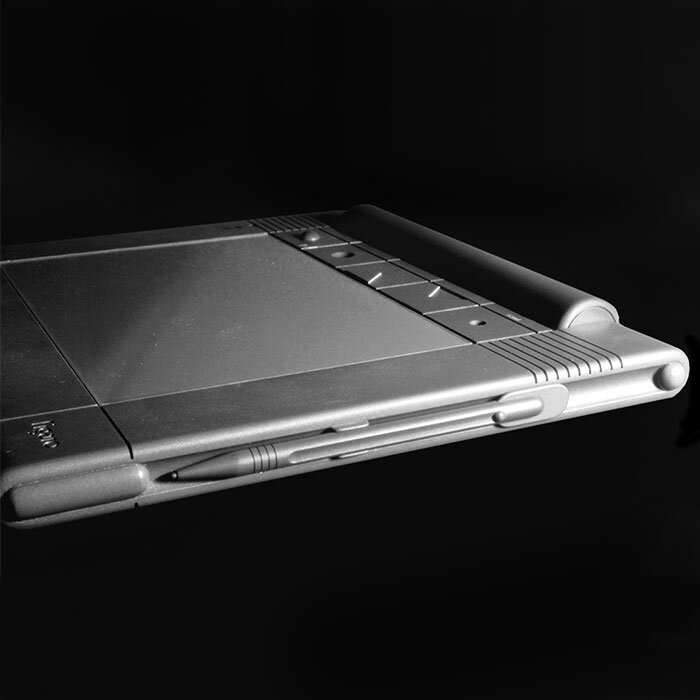
Using Workspace 2000, Patton Design developed a range of tablet concepts that drew upon studies about the interactions of micro and macro devices in a communicative process. Much later, Doug developed the first tablets with a memory stylus that contained what he called Personality Modules.
Patton Design produced the prototype of a small phone/tablet concept, later recognized and published by The Wall Street Journal. This device, the PAD, appeared on the main page of the paper. Later, Jim Scully, the CEO of Apple at the time, revised the acronym for the PDA to the iPAD, based on the Workspace 2000 concepts.

SUCCESS These exploratory programs contributed to the foundational thinking that shaped the future of mobile computing. Patton Design’s work combined rigorous human-experience analysis with pragmatic technology evaluation—balancing visionary imagination with real-world feasibility.
By harmonizing classical human needs with emerging technological capabilities, the team helped establish directional frameworks that guided large-scale product development.
Following these initiatives, Patton Design transitioned to new innovation partnerships, including work with Microsoft’s Interactive Home Systems, where the firm developed advanced home electronics concepts for Bill Gates’ residence.
RESULTS Many of the original concepts explored during this period foreshadowed products that define today’s marketplace. Guided by principles of intuitive use and human simplicity, Patton Design remains proud of its contributions to early personal computing innovation—and continues its commitment to envisioning the next horizon of transformative technology.